Moon Sweepers cleaning vehicles: Progression Guide
Learn what’s confirmed about Moon Sweepers cleaning vehicles, how dust sales support progression, and how to plan upgrades before launch.
From a Toothbrush to a Lunar Cleanup Operation
An entire Moon and one toothbrush: Moon Sweepers cleaning vehicles promise a welcome change from the game’s deliberately tiny starting tool. That matters because expanding your cleanup operation means managing dust collection, deliveries, and equipment upgrades—not just scrubbing more terrain. This guide explains what is confirmed about Moon Sweepers cleaning vehicles, how they fit into progression, and what to consider before spending your earnings.
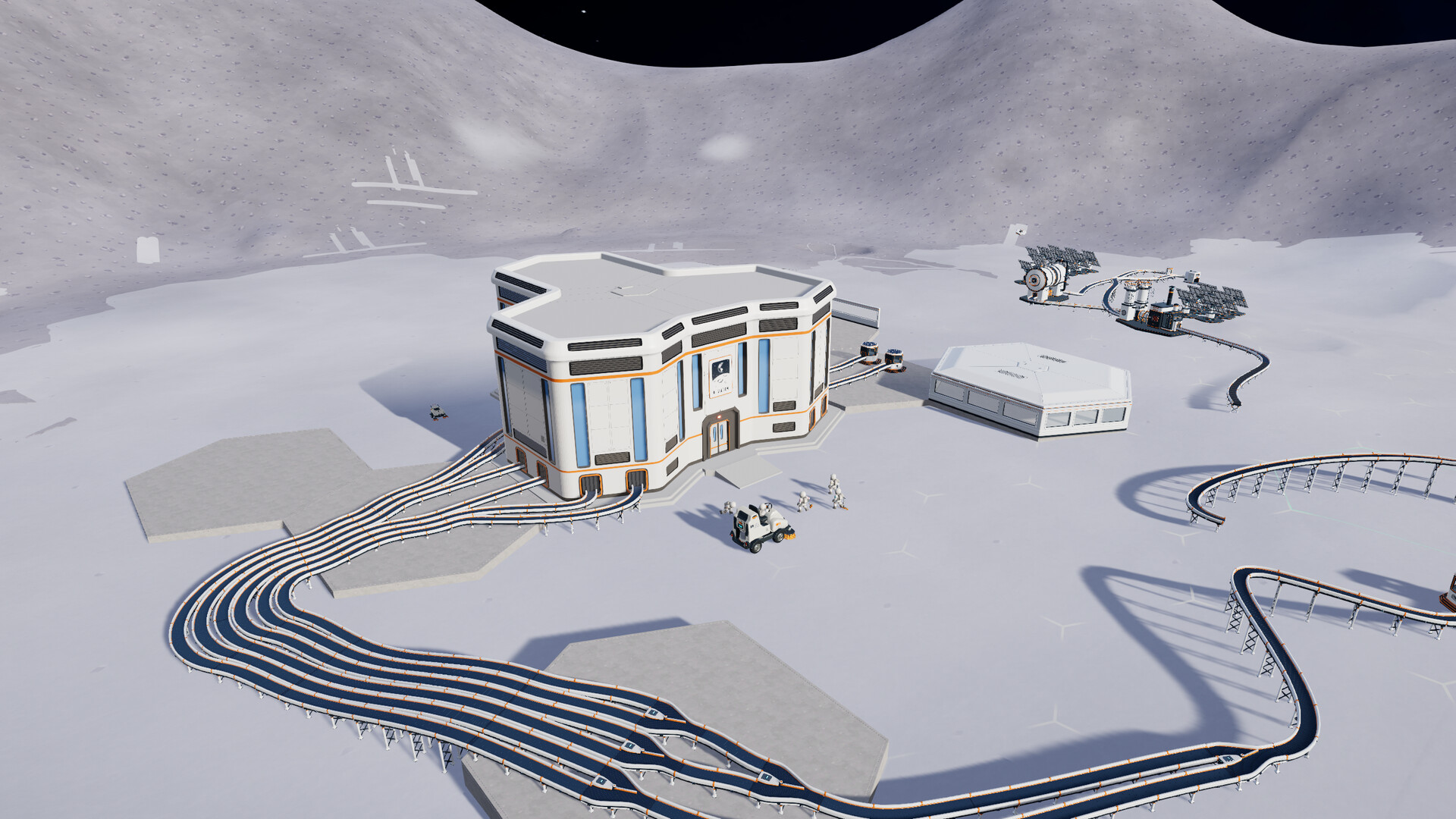
Official screenshot · Source: Steam store
Pre-release status: As of October 20, 2026, Moon Sweepers is scheduled to launch on Steam on October 23, 2026. The official descriptions confirm cleaning vehicles, but they do not provide a vehicle roster, prices, exact unlock requirements, or performance statistics.
That distinction matters. You can prepare a sensible progression strategy now, but a precise “buy this vehicle first” walkthrough would go beyond the available information.
The recommendations below are planning advice based on the announced gameplay loop, not hands-on testing or community reports.
What Is Confirmed About Moon Sweepers Cleaning Vehicles?
Developer DragDrop Games describes a cleanup simulator that grows from humble hand tools into a larger operation. You collect lunar dust, sell shipments, improve your equipment, and eventually put cleaning vehicles to work.
The official Moon Sweepers Steam listing explicitly includes unlocking cleaning vehicles in its overview. It also connects the expanding operation with placing depots near active cleanup areas.
Here is what the published material establishes—and where the details stop.
| Feature | Confirmed information | Not specified in the supplied sources |
|---|---|---|
| Cleaning vehicles | Vehicles are part of the growing cleanup operation | Names, models, and number of vehicles |
| Vehicle progression | The overview says players unlock cleaning vehicles | Exact requirements or purchase costs |
| Starting equipment | Players begin with a toothbrush | Complete early-game tool sequence |
| Equipment upgrades | Better tools and increased carrying capacity are available | Upgrade prices and numerical bonuses |
| Depots | Players can place depots near their work | Placement costs, limits, or restrictions |
| Multiplayer | Solo play and online co-op for up to 16 players | Vehicle ownership and sharing rules |
What role do vehicles serve?
The confirmed role of Moon Sweepers cleaning vehicles is to support an operation that has outgrown its starting equipment. They are presented as cleaning equipment, rather than simply a way to travel around the lunar surface.
However, the descriptions do not explain their collection systems. Do not assume vehicles have built-in dust storage, automatic unloading, autonomous operation, or particular attachments.
Likewise, user-defined Steam tags are not a substitute for a vehicle specification sheet. An “Automation” tag alone does not establish self-driving sweepers or passive dust income.
The useful takeaway is straightforward: vehicles are confirmed, but their exact advantages must be evaluated when their in-game details are available.
How the Dust-to-Upgrade Progression Works
Before planning a vehicle purchase, understand the system that supports your upgrades. Moon Sweepers ties equipment growth to the dust you remove from the lunar surface.
The announced sequence is simple: gather dust, fill storage, deliver it to a depot, and launch a shipment for payment. Earnings then support better equipment and increased carrying capacity as your operation expands.
| Step | Confirmed action | Practical planning advice |
|---|---|---|
| 1. Collect | Remove and gather lunar dust | Start with a clearly defined work area |
| 2. Store | Fill your available dust storage | Notice how often capacity interrupts cleaning |
| 3. Deliver | Bring collected dust to a depot | Watch how much time deliveries consume |
| 4. Ship | Launch shipments to receive payment | Complete the selling loop before planning spending |
| 5. Improve | Invest earnings in equipment upgrades | Address the limitation slowing you down most |
| 6. Expand | Place depots and use cleaning vehicles | Reassess logistics as the work area grows |
Why collection speed is only part of the equation
A faster cleaning tool is valuable, but it does not automatically solve every problem. If you repeatedly stop because storage is full, carrying capacity deserves attention. If each delivery involves a long trip, depot placement may matter more than another collection upgrade.
Consider two hypothetical sessions:
- Session A: You spend most of your time actively cleaning, with brief delivery interruptions.
- Session B: You spend much of your time traveling between the work area and a depot.
Session A suggests collection performance is worth examining. Session B points toward a delivery problem. These are diagnostic examples, not measured results from the game.
Track the whole earning cycle
When comparing upgrades, measure from the start of collection through shipment payment. Timing only the cleaning portion can hide delays elsewhere.
For example, a tool might fill storage faster while leaving the same delivery journey afterward. That may still improve earnings, but the benefit should be judged across the complete cycle.
This is the most useful framework for evaluating Moon Sweepers cleaning vehicles once their costs and capabilities are visible: determine whether they improve your overall operation, not just one impressive-looking task.
Planning Your First Vehicle Investment
There is no verified vehicle unlock checklist in the supplied pre-release material. Exact currency requirements, progression gates, shop locations, and unlock menus remain unspecified.
Rather than following an invented purchase order, prepare a decision process you can apply when playing.
Step 1: Establish a baseline
Complete a few ordinary collection-and-delivery cycles with your current equipment. Note what repeatedly stops progress:
- Slow dust removal
- Limited carrying capacity
- Long delivery journeys
- Confusion over which area to clean next
You do not need elaborate tracking. A short note about your most frequent interruption can make the next purchase decision clearer.
Step 2: Read the actual vehicle details
When Moon Sweepers cleaning vehicles become available to inspect, check the information provided in-game before committing your earnings.
| Question to check | Why it matters |
|---|---|
| What does the vehicle cost? | Determines the immediate spending commitment |
| What unlock conditions are listed? | Separates something affordable from something accessible |
| What cleaning capabilities are described? | Helps compare it with your current equipment |
| Does it list storage capacity? | Clarifies whether it could reduce delivery interruptions |
| Are operating requirements listed? | Reveals any additional responsibilities or expenses |
| What are the multiplayer access rules? | Helps a co-op crew coordinate its plans |
These are questions to investigate, not claims that every listed system exists. Fuel, maintenance, vehicle storage, and shared ownership are not established by the supplied descriptions.
Step 3: Compare against the next-best upgrade
A vehicle should not automatically outrank every smaller purchase. Compare it with whichever available improvement addresses your current problem.
If storage is the limiting factor, examine the carrying-capacity option. If deliveries are inconvenient, review depot placement. If neither is holding you back, better cleaning equipment may be the more relevant investment.
There is no supported universal ranking yet. A solo player and a coordinated group may reasonably choose different priorities.
Step 4: Test before expanding further
After an upgrade, repeat a similar cleanup route and compare the experience. Did you complete the full cycle sooner? Did you make fewer delivery trips? Was the equipment comfortable to use?
A practical upgrade should produce a benefit you can identify. Avoid assuming that the largest or most expensive option must offer the best value.
Depot Placement and Co-op Planning
Vehicles sit within a broader cleanup system. The official material also emphasizes nearby depots, visible cleaning progress, and the option to spread out or work together.
That makes organization useful even before detailed vehicle statistics are known.
Keep delivery routes relevant to your work
The developer specifically describes placing depots near cleanup areas. The sensible planning principle is to reduce unnecessary travel between active dust collection and delivery.
| Situation | Suggested approach | Intended benefit |
|---|---|---|
| Working around an established depot | Finish a defined nearby area | Keeps the work route easy to follow |
| Moving toward a distant dusty area | Review available depot-placement options | Could shorten future deliveries |
| Making frequent trips with small loads | Check carrying-capacity upgrades | Could allow more cleaning between trips |
| Finishing the current cleanup patch | Choose the next work area deliberately | Avoids scattered, inconvenient routes |
| Testing newly unlocked equipment | Use a familiar area for comparison | Makes changes easier to assess |
Placement prices and restrictions are not published in the supplied material. Check those before treating another depot as the cheapest solution.
Give co-op players clear responsibilities
Moon Sweepers supports online lobbies of up to 16 players, and the developer says crews can divide the terrain or clean together. Both approaches are valid starting points.
For a small group, agree on an active area and a delivery location. Larger crews may benefit from assigning separate patches so players know where work remains.
Possible organizational roles include:
- Area cleaners: Focus on an agreed section of dusty terrain.
- Route coordinator: Suggests the next area and keeps delivery locations clear.
- Equipment tester: Reports how a newly available tool or vehicle performs.
These are suggested team responsibilities, not official classes.
Do not build a multiplayer plan around unconfirmed dust transfers, shared wallets, or unrestricted vehicle access. Check how those systems actually work first.
Use visible progress as a coordination tool
The lunar surface visibly changes as players clean it. That gives your crew an understandable way to track completed work.
Choose recognizable boundaries, finish a patch, and then move on together or assign the next sections. This is not a verified speed strategy, but it can reduce uncertainty over who is cleaning where.
As Moon Sweepers cleaning vehicles enter your operation, keep using the same basic discipline: clear work areas, practical delivery routes, and purchases tied to an identifiable need.
FAQ
How do you unlock Moon Sweepers cleaning vehicles?
The official Steam description confirms that cleaning vehicles can be unlocked as the operation grows. However, the supplied sources do not specify the unlock requirements, prices, or purchase interface. Collecting and selling dust is the confirmed foundation of equipment progression.
What is the best cleaning vehicle to buy first?
No reliable recommendation is available from the supplied pre-release information. There is no published vehicle roster or comparison of cost, speed, capacity, and cleaning performance. Once those details are available, compare each option against your current limitation rather than assuming one vehicle suits everyone.
Can you play Moon Sweepers solo?
Yes. Moon Sweepers supports single-player as well as online co-op for up to 16 players. The game includes cleaning vehicles in its overall feature description, but the supplied sources do not detail whether vehicle access or progression rules differ between solo and multiplayer sessions.
When does Moon Sweepers release on Steam?
As of October 20, 2026, the planned Steam release date is October 23, 2026. Until launch details can be checked in-game, treat exact vehicle prices, unlock guides, performance rankings, and claims about automation as unverified.
Related Guides
Moon Sweepers carrying capacity: Upgrade Guide
Learn how Moon Sweepers carrying capacity upgrades fit into dust collection, depot deliveries, and smarter progression before launch.
Moon Sweepers cleaning tools: Upgrade Guide
Explore Moon Sweepers cleaning tools, the starting toothbrush, dust sales, capacity upgrades, and vehicle progression in this prerelease guide.
Moon Sweepers collect lunar dust: Beginner Guide
Learn how lunar dust collection, depot shipments, upgrades, and 16-player co-op work in Moon Sweepers with this prelaunch beginner guide.
Moon Sweepers developer: DragDrop Games Launch Guide
Meet Moon Sweepers developer DragDrop Games and explore the October 23 Steam release, 16-player co-op, gameplay, and PC requirements.
Moon Sweepers co-op lobbies: 16-Player Guide
Explore Moon Sweepers co-op lobbies, the 16-player limit, cleaning progression, launch details, and practical tips for organizing your crew.