Moon Sweepers cleaning tools: Upgrade Guide
Explore Moon Sweepers cleaning tools, the starting toothbrush, dust sales, capacity upgrades, and vehicle progression in this prerelease guide.
Moon Sweepers Cleaning Tools: What’s Confirmed?
Your first assignment is an entire moon, and your starting equipment is a toothbrush. Understanding Moon Sweepers cleaning tools matters because collecting dust is only part of the job—you also need to transport it, sell it, and reinvest your earnings. This guide to Moon Sweepers cleaning tools explains the confirmed progression and offers practical ways to plan your upgrades without inventing item names or stats.
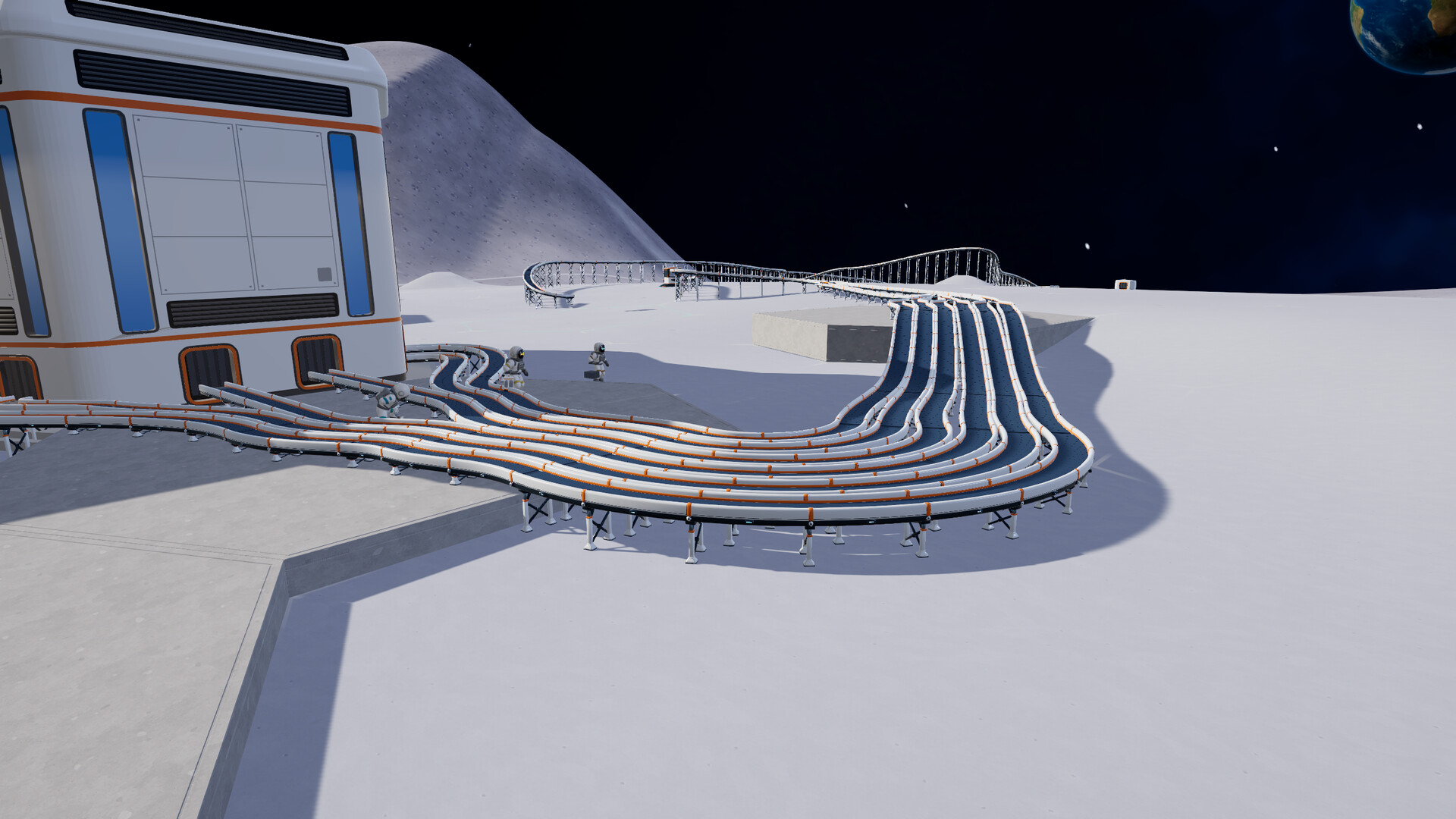
Official screenshot · Source: Steam store
Prerelease note: As of October 20, 2026, Moon Sweepers is scheduled to launch on October 23, 2026. This guide uses the developer’s Steam description, not hands-on testing, player experience, or community reports. Exact tool prices, upgrade values, and vehicle unlock requirements are not provided in the available material.
Developed and published by DragDrop Games, Moon Sweepers supports single-player play and online co-op lobbies of up to 16 players. Its premise is straightforward: turn a severely underfunded lunar cleanup assignment into a growing operation.
The official Moon Sweepers Steam listing confirms the following features:
| Feature | Confirmed information | What remains unspecified |
|---|---|---|
| Starting equipment | You begin with a toothbrush | Its cleaning speed and other stats |
| Tool progression | Earnings purchase better cleaning tools and equipment upgrades | Full item list, prices, and upgrade tiers |
| Dust storage | Carrying capacity can be increased | Starting capacity and upgrade amounts |
| Selling dust | Deliver dust to a depot and launch shipments for payment | Sale values and shipment timing |
| Depot placement | Depots can be placed near your work | Costs and placement restrictions |
| Cleaning vehicles | Vehicles become part of your growing operation | Models, performance, and unlock conditions |
The useful distinction is between confirmed systems and recommended strategy. We know tools, storage, depots, and vehicles all contribute to progression. We do not yet have enough information to declare a particular purchase the best first upgrade.
How the Dust-to-Upgrade Loop Works
Moon Sweepers cleaning tools sit inside a larger collection-and-delivery cycle. A faster tool may help you collect more dust, but its practical value also depends on how often you stop cleaning to empty your storage.
According to the developer’s description, the basic process is:
- Clean dusty terrain and collect lunar dust.
- Fill your available storage.
- Deliver the collected dust to a depot.
- Launch shipments to receive payment.
- Spend earnings on tools and increased carrying capacity.
- Expand your operation with nearby depots and cleaning vehicles.
| Stage | Your immediate goal | Useful question to ask |
|---|---|---|
| Cleaning | Collect dust from the lunar surface | Is collection taking most of my time? |
| Storage | Hold dust until delivery | Am I filling up too frequently? |
| Delivery | Reach a depot with collected dust | Is travel interrupting the job? |
| Shipment | Turn collected material into earnings | Have I completed the shipment step? |
| Reinvestment | Improve the operation | Which purchase addresses my biggest delay? |
Treat delivery as part of the job
Do not evaluate efficiency solely by how quickly the ground becomes clean. The developer specifically describes delivering dust and launching shipments to get paid, so collection alone is not the whole economic loop.
A useful launch-day habit is to complete one full cycle before making assumptions about earnings. Watch what happens when you collect, deliver, and ship. That gives you a baseline for comparing later upgrades.
Start with a manageable work area
For your opening session, consider choosing a compact patch of terrain rather than roaming widely. This is a planning recommendation, not a confirmed game bonus.
A defined work area makes it easier to notice how long collection takes, how often storage fills, and how much time you spend returning to a depot. Those observations will tell you more than buying an upgrade simply because it becomes affordable.
Choosing Between Tools, Capacity, and Depots
The most useful way to compare Moon Sweepers cleaning tools is to identify the part of your routine that slows you down most.
That does not mean there is a proven optimal build. Until prices and performance figures are available, upgrade priorities should remain conditional.
| What you observe | Upgrade or change to investigate | Why it may help |
|---|---|---|
| Cleaning takes most of each cycle | Better cleaning tools | They may reduce collection time |
| Storage fills after short cleaning sessions | Increased carrying capacity | It supports larger loads between deliveries |
| Returning to a depot takes too long | Depot placement closer to the work | It may reduce travel interruptions |
| Your work area has expanded substantially | Cleaning vehicles | They are intended to support a growing operation |
| Several delays feel equally significant | Compare another complete cycle | More observation can clarify the priority |
Upgrade the biggest source of delay
Suppose cleaning feels slow, but you rarely need to empty your storage. A better tool is a reasonable upgrade to investigate.
Now suppose you fill your storage quickly and repeatedly leave a productive work area. In that situation, capacity deserves attention. The official description explicitly connects carrying-capacity upgrades with taking on larger jobs between deliveries.
Finally, if the return trip dominates your routine, another cleaning upgrade may leave that problem untouched. Check whether a closer depot is available and practical.
The guiding principle is simple: improve the part of the cycle that currently costs you the most time.
Use a basic time comparison
You can compare purchases without knowing every hidden mechanic:
Cycle time = cleaning time + travel time + delivery and shipment time
For illustration only, imagine a cycle takes six minutes: three minutes cleaning, two minutes traveling, and one minute delivering and shipping. Cutting cleaning time by one minute and cutting travel time by one minute would produce the same five-minute cycle.
Those are hypothetical numbers, not Moon Sweepers measurements. The example shows why logistics can matter as much as tool performance.
For meaningful comparisons, use similarly sized loads and nearby work areas. Otherwise, changing terrain or delivery distance could make an upgrade appear more effective than it really is.
From the Toothbrush to Cleaning Vehicles
The confirmed starting point for Moon Sweepers cleaning tools is deliberately modest: a toothbrush. Beyond that, the available description promises better equipment without identifying a complete sequence of named tools.
That makes a flexible progression plan more useful than a fabricated tier list.
| Progression stage | Confirmed element | Suggested focus |
|---|---|---|
| Opening | Toothbrush | Learn the full collection-and-shipment cycle |
| Early reinvestment | Better tools and capacity upgrades | Address the most obvious delay |
| Expanding work area | Placeable depots | Keep delivery routes practical |
| Larger operation | Cleaning vehicles | Evaluate their role once details are visible |
Make the first purchase a measured decision
Before spending your first earnings, check the information the game provides. Look for the purchase price, stated effect, and any conditions attached to an upgrade.
If numerical stats are displayed, compare those rather than relying on appearance. If the descriptions are vague, change one part of your setup at a time so you can judge the result.
A practical checklist:
- Complete at least one shipment before evaluating progression.
- Notice whether collection, storage, or travel is the main interruption.
- Read available upgrade descriptions carefully.
- Compare the next few cycles after a purchase.
- Reassess when you move to a more distant work area.
Don’t assume every vehicle is automatically the best choice
Cleaning vehicles are confirmed, but their purchase costs, handling, capacity, and cleaning performance are not detailed in the supplied listing.
It would therefore be premature to call a particular vehicle essential or recommend saving every early payment for one. Once those details are visible, compare the vehicle’s benefits against the tool, storage, and depot improvements you could buy instead.
Also, avoid importing equipment names from real-world lunar-cleaning discussions. Industrial sweeper concepts are not evidence that those machines appear in this game.
Planning an Efficient Co-op Cleanup
Moon Sweepers cleaning tools also need to fit the way your group plays. The official description allows teams to spread out across the surface or work together on the same area, with up to 16 players in a lobby.
That player limit is not a guarantee of sixteen times the productivity. Travel, coordination, and time spent deciding where to work can still affect your session.
| Suggested team approach | Potential benefit | Coordination task |
|---|---|---|
| Divide the surface into work zones | Clear ownership of each area | Agree on boundaries |
| Clean one area together | Keep the group focused | Choose the next area before moving |
| Expand around nearby depots | Keep delivery destinations clear | Tell everyone which depot serves the area |
| Review progress after shipments | Identify recurring delays | Compare observations before buying upgrades |
These are organizational suggestions, not confirmed role systems. The available description does not establish shared wallets, item trading, or the ability to transport another player’s collected dust.
Use a short pre-session plan
Before everyone starts brushing, agree on three things: where to clean, where to deliver, and when to move on.
That is usually more useful than assigning elaborate jobs before you understand the mechanics. After a few shipments, discuss what interrupted the work. One player may notice long delivery routes while another finds storage fills too quickly.
Keep purchases grounded in the systems the game actually exposes. If money or equipment ownership works differently than expected, adjust the plan rather than assuming every upgrade benefits the whole lobby.
For solo players, the same principle applies without the coordination step: maintain a compact work area, watch your delivery route, and buy upgrades that improve your complete cycle.
FAQ: Moon Sweepers Cleaning Tools
What cleaning tool do you start with in Moon Sweepers?
You start with a toothbrush, according to the developer’s Steam description. Collecting and selling lunar dust funds better tools and equipment upgrades. The available prerelease material does not provide the toothbrush’s cleaning rate or a complete list of replacement tools.
What is the best first upgrade?
There is no verified best first purchase as of October 20, 2026. For Moon Sweepers cleaning tools, prioritize based on what slows your routine: investigate tools for slow collection, capacity for frequent unloading, and nearby depots for lengthy delivery trips. Exact prices and benefits are needed for a definitive ranking.
How do you earn money for better equipment?
Collect lunar dust, take it to a depot, and launch shipments to receive payment. The developer says earnings can purchase new cleaning tools and increased carrying capacity. Check the shipment process carefully rather than assuming that collecting dust immediately adds money to your balance.
Are cleaning vehicles and solo play confirmed?
Yes. The Steam listing confirms cleaning vehicles, single-player support, and online co-op for up to 16 players. Specific vehicle models and unlock requirements are not listed in the supplied material. For now, build your plan around the confirmed loop: collect, deliver, ship, and reinvest where it helps most.
Related Guides
Moon Sweepers carrying capacity: Upgrade Guide
Learn how Moon Sweepers carrying capacity upgrades fit into dust collection, depot deliveries, and smarter progression before launch.
Moon Sweepers cleaning vehicles: Progression Guide
Learn what’s confirmed about Moon Sweepers cleaning vehicles, how dust sales support progression, and how to plan upgrades before launch.
Moon Sweepers collect lunar dust: Beginner Guide
Learn how lunar dust collection, depot shipments, upgrades, and 16-player co-op work in Moon Sweepers with this prelaunch beginner guide.
Moon Sweepers developer: DragDrop Games Launch Guide
Meet Moon Sweepers developer DragDrop Games and explore the October 23 Steam release, 16-player co-op, gameplay, and PC requirements.
Moon Sweepers co-op lobbies: 16-Player Guide
Explore Moon Sweepers co-op lobbies, the 16-player limit, cleaning progression, launch details, and practical tips for organizing your crew.