Moon Sweepers carrying capacity: Upgrade Guide
Learn how Moon Sweepers carrying capacity upgrades fit into dust collection, depot deliveries, and smarter progression before launch.
Carry More Dust, Spend Less Time Delivering
A toothbrush is an absurd tool for cleaning the Moon, but limited storage could make the job even slower. Moon Sweepers carrying capacity matters because it determines how much lunar dust you can collect between deliveries, affecting how often you interrupt cleaning to unload. This Moon Sweepers carrying capacity guide explains the confirmed upgrade loop and how to evaluate storage upgrades without confusing prelaunch expectations with tested strategies.
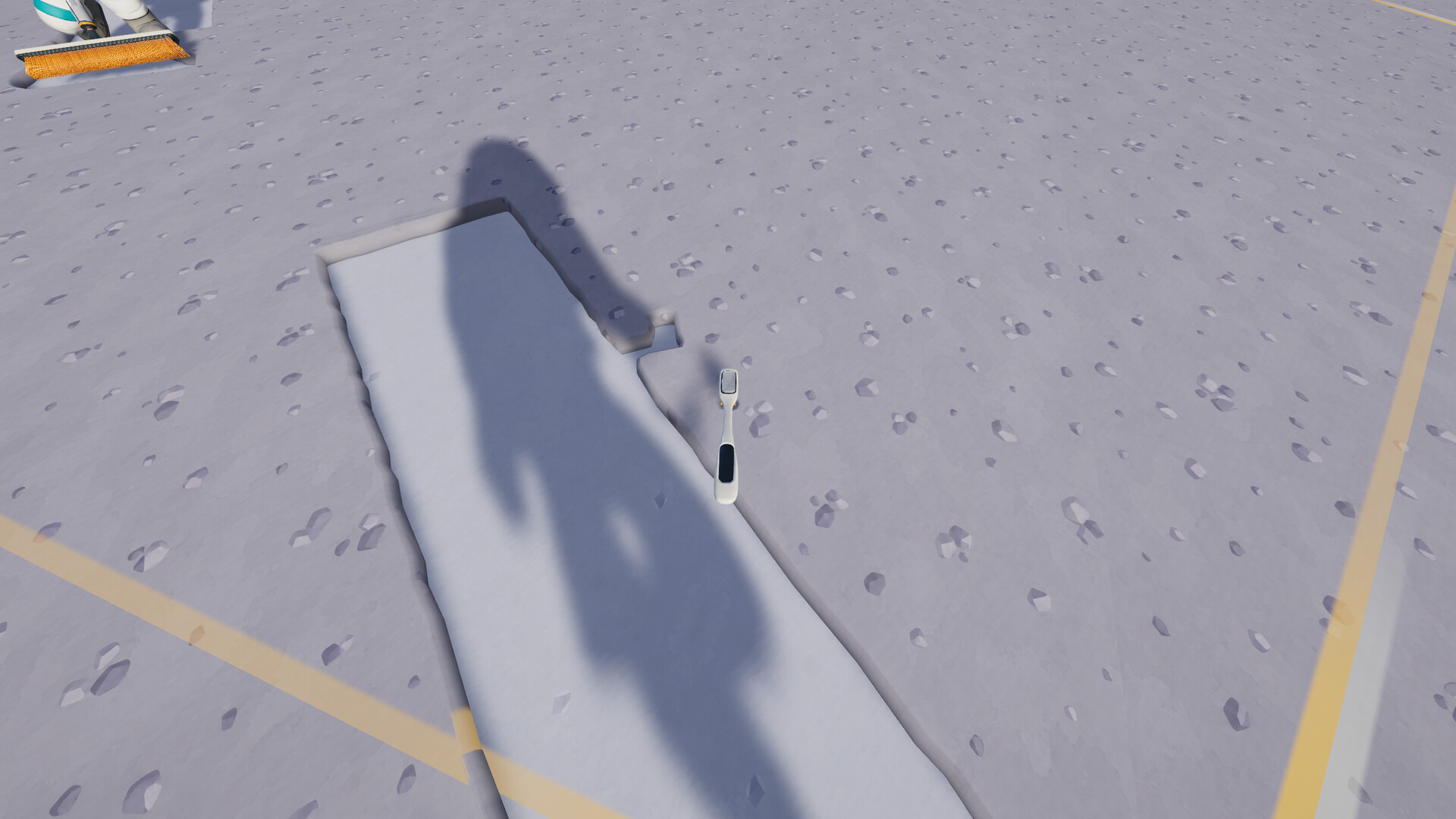
Official screenshot · Source: Steam store
Prelaunch status: As of October 20, 2026, Moon Sweepers is scheduled to release on Steam on October 23. The available official material confirms purchasable capacity improvements, but it does not provide starting storage values, upgrade prices, maximum capacity, or exact purchase-menu instructions.
That distinction matters. You can plan around the confirmed collect-and-deliver loop now, but any precise upgrade ranking would require information that has not been published in the supplied sources.
How Moon Sweepers Carrying Capacity Works
Carrying capacity is the amount of collected lunar dust you can hold before making another delivery. The developer describes a progression system in which you collect dust, bring it to a depot, launch shipments for payment, and reinvest your earnings.
According to the official Moon Sweepers Steam listing, that reinvestment includes both new cleaning tools and increased carrying capacity. The intended benefit of more storage is straightforward: you can handle larger cleaning jobs between deliveries.
However, personal storage, depot storage, and vehicle storage should not automatically be treated as interchangeable systems. The supplied material does not explain their exact relationship.
| Capacity-related question | Confirmed information | What remains unconfirmed |
|---|---|---|
| Can you increase carrying capacity? | Yes, through spending earned money | Upgrade names, prices, and tiers |
| What do you collect? | Lunar dust | Its measurement units and starting storage limit |
| Where does collected dust go? | You deliver it to a depot | Exact unloading controls and transfer behavior |
| How do you earn money? | Launch shipments after delivering dust | Shipment values, timing, and any fees |
| Are cleaning vehicles available? | Yes, as the operation develops | Vehicle cargo limits or storage bonuses |
Why storage changes your cleaning rhythm
Think of carrying capacity as a limit on the length of a collection trip. A bigger allowance lets you collect more dust before returning, but it does not necessarily make your cleaning tool work faster.
That creates two different upgrade goals:
- Better tools: Intended to improve your cleaning equipment.
- More carrying capacity: Lets you collect more between deliveries.
- Nearby depots: Give you a delivery destination closer to the work area.
- Cleaning vehicles: Expand the operation, although their precise capabilities remain unspecified.
The useful question is not simply, “Can I buy more storage?” It is, “Is storage the thing currently slowing me down?”
How to Increase Carrying Capacity
The confirmed route to increasing Moon Sweepers carrying capacity is to earn money from dust shipments and spend those earnings on capacity improvements. Neither official source identifies a particular shop, terminal, NPC, keyboard shortcut, or upgrade screen.
Until those details are verified, the reliable progression outline is:
| Step | Action | Purpose |
|---|---|---|
| 1 | Collect lunar dust using your available equipment | Gather material for your next delivery |
| 2 | Bring the collected dust to a depot | Move it into the shipping process |
| 3 | Launch a shipment | Receive payment |
| 4 | Review available equipment and capacity purchases | Compare ways to improve your operation |
| 5 | Buy increased carrying capacity when appropriate | Collect more dust between deliveries |
| 6 | Reassess after using the upgrade | See whether storage is still your main constraint |
What to check before buying
Once the game is available, inspect the upgrade description rather than assuming every storage-related purchase affects your character.
Look for:
- The capacity increase the purchase actually provides.
- Whether the upgrade applies to a player, vehicle, or another storage system.
- Any prerequisite purchase or progression requirement.
- Whether an upgrade affects only the buyer or the whole crew.
- Its price relative to other available equipment.
These are verification questions, not confirmed features. In particular, the official information does not establish whether capacity upgrades are shared in multiplayer.
Avoid planning your entire opening around an assumed “backpack upgrade” or named storage tier. The developer confirms the function, not that terminology.
Should You Upgrade Capacity or Tools First?
There is not enough published data to name a universally best first purchase. Moon Sweepers carrying capacity upgrades should be evaluated against your actual cleaning and delivery rhythm.
A practical approach is to identify which activity consumes the most time. Are you slowly gathering dust, repeatedly returning with full storage, or traveling a long way to unload?
| What you observe during play | Option worth evaluating | Reason |
|---|---|---|
| Storage fills quickly, interrupting cleaning | Increased carrying capacity | More dust can be collected per trip |
| Gathering a load takes much longer than delivering it | Better cleaning tools | Collection may be the larger constraint |
| Delivery trips involve lengthy travel | A depot closer to the work area | Shorter routes may reduce delivery overhead |
| An upgrade changes how quickly you fill storage | Recheck your next purchase | The limiting factor may have shifted |
| A vehicle becomes available | Read its capabilities before buying | Its storage and efficiency benefits are not yet documented |
This is a decision framework, not a tested upgrade order.
A hypothetical example: why larger loads can help
Suppose a fictional setup lets you carry 100 dust units, and a capacity upgrade raises that to 150 units. Collecting 600 units would then require six full loads before the upgrade and four afterward.
Those figures are illustrative only; they are not Moon Sweepers statistics.
| Hypothetical measure | Before upgrade | After upgrade |
|---|---|---|
| Carrying capacity | 100 units | 150 units |
| Dust to deliver | 600 units | 600 units |
| Full loads needed | 6 | 4 |
| Delivery trips avoided | — | 2 |
If each avoided trip takes meaningful time, the upgrade could be valuable. If your depot is immediately nearby and collection is slow, the benefit may be less noticeable.
Also, 50% more storage does not automatically mean 50% more income per minute. You still need to collect the dust, travel, unload, and complete the shipping process. Storage changes one part of that cycle.
Compare upgrades by the time they might save
Before spending, ask three questions:
- How often am I returning because storage is full?
- How long does each delivery take compared with collecting a load?
- Would another available purchase address a bigger delay?
This makes your next Moon Sweepers carrying capacity purchase a response to an observed problem rather than an automatic habit.
A useful launch-day test is to time a few complete collection-and-delivery cycles before and after upgrading. Use similar work areas and routes where possible. One unusually convenient trip is not enough to establish a dependable improvement.
Depot Placement and Co-op Planning
Capacity upgrades are only one part of managing delivery interruptions. The developer also confirms that you can place depots near your work, giving you another way to improve the collection loop.
A larger load reduces how often you need to deliver a given amount of dust. A closer depot can reduce the distance involved in each delivery. Neither option should be judged in isolation.
Keep delivery distance in view
As you clean the terrain around an existing depot, your active work area may move farther away. When that happens, reassess the route before assuming you need another capacity upgrade.
A practical planning routine is:
- Pick the area you intend to clean next.
- Identify the depot you would use.
- Estimate how much of each trip would be spent traveling.
- Compare available depot-placement options with capacity purchases.
- Reevaluate after moving into another area.
Depot costs, placement restrictions, and relocation rules are not described in the supplied material. Check those details in-game before committing resources.
Coordinate with your crew without assuming shared upgrades
Moon Sweepers supports solo play and online co-op for up to 16 players. The developer says crews can spread out or work on the same area.
That creates room for coordination, but not enough evidence to claim a particular multiplayer strategy is optimal. For example, dedicated hauling roles would depend on transfer mechanics that have not been confirmed.
| Crew planning question | Sensible approach |
|---|---|
| Where will everyone clean? | Agree on a work area or divide nearby sections |
| Which depot will the crew use? | Identify convenient delivery points before spreading out |
| Does one purchase upgrade everyone? | Verify the purchase scope in-game |
| Can players transfer dust directly? | Check the mechanic before assigning a hauling role |
| Should everyone buy capacity first? | Let each player evaluate their actual collection cycle |
Moon Sweepers carrying capacity may matter differently to players working at different distances from a depot. Someone cleaning nearby could have different priorities from a teammate operating farther away.
What still needs launch-day testing
The remaining unknowns prevent a trustworthy maximum-capacity guide or exact upgrade-cost chart. Important details to verify include:
- Starting capacity and the units used to display it.
- Capacity gained per purchase.
- Upgrade prices and prerequisites.
- Whether there is a maximum storage limit.
- Whether full storage prevents further collection.
- Whether carrying a full load changes movement.
- How capacity purchases behave in co-op.
- Whether vehicles have separate cargo systems.
For now, the strongest guidance is simple: collect, ship, compare your available purchases, and spend on the constraint you can actually observe. More storage is useful when delivery frequency is the problem—not necessarily whenever an upgrade becomes affordable.
FAQ
How do you increase Moon Sweepers carrying capacity?
Collect lunar dust, deliver it to a depot, launch shipments to earn money, and spend those earnings on increased carrying capacity. This progression is confirmed, but the exact purchase interface and upgrade requirements have not been detailed in the supplied official material.
What is the maximum carrying capacity?
The maximum has not been disclosed in the supplied sources as of October 20, 2026. Starting capacity, upgrade increments, and the number of available tiers are also unconfirmed. Exact numerical charts would therefore be premature.
Should I buy capacity upgrades before better tools?
There is no verified universal purchase order. Consider capacity when full storage frequently interrupts cleaning. Consider better tools when gathering dust takes most of your time. Also assess depot distance, since a shorter delivery route may address a different part of the same problem.
Do cleaning vehicles increase carrying capacity?
Cleaning vehicles are confirmed, but their cargo capacities and effects on player storage are not explained. Do not assume that unlocking a vehicle automatically increases your personal carrying limit. Check its description and compare its actual benefits with a direct capacity purchase.
Related Guides
Moon Sweepers cleaning tools: Upgrade Guide
Explore Moon Sweepers cleaning tools, the starting toothbrush, dust sales, capacity upgrades, and vehicle progression in this prerelease guide.
Moon Sweepers cleaning vehicles: Progression Guide
Learn what’s confirmed about Moon Sweepers cleaning vehicles, how dust sales support progression, and how to plan upgrades before launch.
Moon Sweepers collect lunar dust: Beginner Guide
Learn how lunar dust collection, depot shipments, upgrades, and 16-player co-op work in Moon Sweepers with this prelaunch beginner guide.
Moon Sweepers developer: DragDrop Games Launch Guide
Meet Moon Sweepers developer DragDrop Games and explore the October 23 Steam release, 16-player co-op, gameplay, and PC requirements.
Moon Sweepers co-op lobbies: 16-Player Guide
Explore Moon Sweepers co-op lobbies, the 16-player limit, cleaning progression, launch details, and practical tips for organizing your crew.