Moon Sweepers multi-player: 16-Player Co-op Guide
Explore Moon Sweepers multi-player, including its 16-player co-op limit, cleanup progression, PC requirements, and what remains unconfirmed.
Moon Sweepers Multiplayer at a Glance
An entire Moon needs cleaning, and your starting tool is a toothbrush. Moon Sweepers multi-player turns that absurd assignment into an online co-op job for up to 16 players, making it worth a look if your group enjoys building something together rather than competing. This Moon Sweepers multi-player guide explains the confirmed features, how the cleanup economy works, and what you should check before organizing a session.
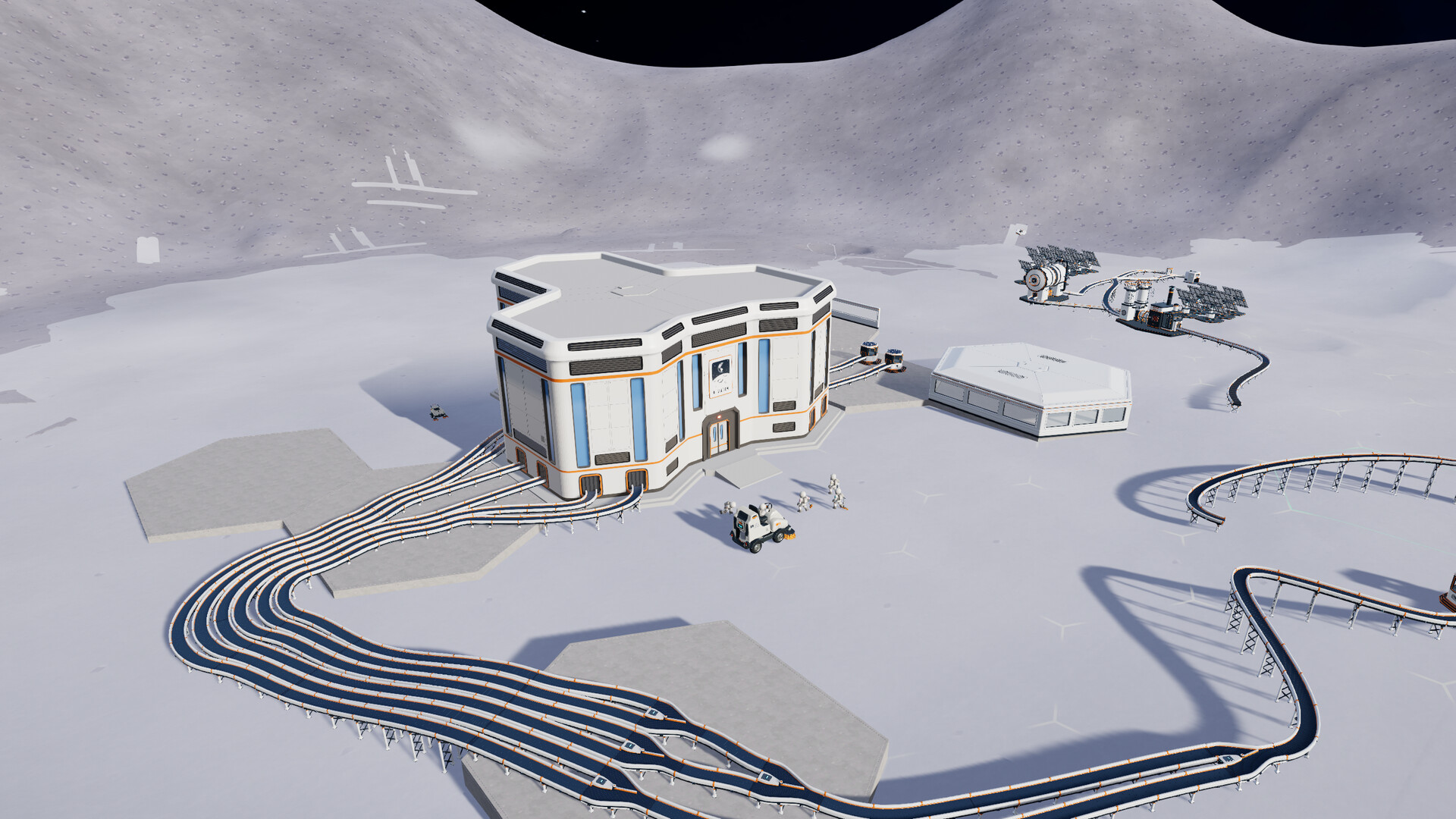
Official screenshot · Source: Steam store
Developed and published by DragDrop Games, Moon Sweepers is scheduled to launch on Steam on October 23, 2026. As of October 20, it is still unreleased, so this is a prelaunch guide—not a hands-on review or a tested performance report.
The premise puts your crew under the Lunar Surface Department, an organization with ambitious cleaning goals and inadequate equipment. You collect lunar dust, ship it out for payment, and invest in tools that make the next stretch of work more manageable.
| Feature | Confirmed information |
|---|---|
| Maximum lobby size | Up to 16 players total |
| Multiplayer format | Online cooperative play |
| Solo option | Single-player is supported |
| Planned release | October 23, 2026 |
| Listed platform | Windows PC through Steam |
| Starting equipment | A toothbrush |
| Progression | Better tools, increased carrying capacity, depots, and cleaning vehicles |
| Main activity | Collecting and selling lunar dust |
The important distinction is 16 players total, not you plus 16 friends. A full crew would consist of you and up to 15 others.
For current availability and feature listings, check the official Moon Sweepers Steam store page. Release plans and technical details can change before launch.
How Moon Sweepers Multi-player Progression Works
Moon Sweepers multi-player centers on a repeatable cleanup-and-upgrade loop. Dust is both the material you remove from the landscape and the resource you sell to fund better equipment.
The official description confirms that players can spread across the surface or work together in one area. That gives a crew a straightforward choice: divide the territory to cover more ground, or concentrate on a smaller section and watch it become clean together.
From toothbrush to cleaning vehicles
Your early equipment is deliberately modest. The longer-term progression introduces better cleaning tools, additional carrying capacity, strategically placed depots, and vehicles.
| Stage | Confirmed activity | Practical planning takeaway |
|---|---|---|
| Collect | Remove lunar dust and fill your storage | Pay attention to how quickly your storage fills |
| Deliver | Bring collected dust to a depot | Consider the distance between your work area and the depot |
| Ship | Launch shipments to receive payment | Make deliveries part of your routine |
| Upgrade | Purchase improved tools and carrying capacity | Address whichever limitation interrupts work most |
| Expand | Place depots and use cleaning vehicles | Reassess your work area as equipment improves |
These planning suggestions follow from the announced mechanics. They are not a tested upgrade order, and the available information does not establish which purchase offers the best return.
For example, a stronger tool might be appealing, but it may not solve a session dominated by trips to unload dust. Conversely, more storage may be less useful if collecting a full load already takes a long time. The sensible approach is to identify the actual delay before spending.
Visible progress is part of the appeal
The terrain visibly changes as you remove dust. That matters because your group can see the result of its work rather than relying only on a currency counter.
A useful first-session objective would be finishing a clearly defined patch of ground. It gives everyone a shared target and makes it easier to decide when to deliver dust, regroup, or move on.
The available descriptions do not establish exact cleaning rates, vehicle unlock prices, map dimensions, or completion time. Any precise earnings-per-minute calculation would therefore be speculative.
Practical Tips for Your First Co-op Session
The best preparation for Moon Sweepers multi-player is lightweight coordination, not a complicated management system. Your group needs a shared goal and an understanding of the delivery loop; it does not need a spreadsheet before anyone touches a brush.
The following are suggested approaches based on confirmed features, not player experience or community reports.
Start with one manageable work area
Even if everyone wants to scatter immediately, consider beginning near the same depot. This should make it easier to learn collection, storage, deliveries, and shipments without also coordinating widely separated work sites.
Once everyone understands the process, decide whether to stay together or split into smaller groups.
| Crew size | Suggested approach | Main coordination concern |
|---|---|---|
| 2–4 players | Start together and divide nearby patches | Keeping delivery trips from interrupting the group |
| 5–8 players | Try two small teams working in neighboring areas | Maintaining a clear boundary between work zones |
| 9–16 players | Assign several zones and agree on short-term goals | Preventing confusion about unfinished areas and priorities |
These are organizational suggestions, not performance rankings. There is no verified evidence that a particular crew size produces the fastest progression.
Use bottlenecks to guide purchases
Before choosing an upgrade, ask three questions:
- Are we collecting too slowly? Look at the available cleaning-tool improvements.
- Are we unloading constantly? Consider increased carrying capacity.
- Are we spending too much time traveling? Review depot placement and the available vehicle options.
This approach keeps purchases tied to an observable problem. It also avoids assuming that the most expensive option must be the best next step.
However, the supplied information does not explain whether money and purchases are shared or individual. Confirm that in-game before planning a crew-wide spending strategy.
Choose clear, achievable session goals
“Clean the Moon” is the premise, but it is not a particularly useful plan for your first evening. Smaller goals make coordination easier:
- Learn how to collect, deposit, and ship dust.
- Finish a recognizable section of terrain.
- Make an equipment purchase and observe the difference.
- Review whether your depot remains conveniently located.
- Choose the next work area together.
For a large group, short check-ins can help. Ask which patches are finished, who is delivering, and what is slowing everyone down. You can coordinate through your usual communication tools; built-in voice chat has not been confirmed in the supplied material.
Finally, leave room for the joke. Moon Sweepers is presenting an intentionally ridiculous job, not a serious workplace assessment. Your crew can pursue efficiency without turning every missed patch into a performance review.
PC Requirements and Prelaunch Checks
Before inviting a full Moon Sweepers multi-player crew, compare everyone’s hardware with the published requirements. Steam lists Windows configurations and a broadband internet connection.
| Component | Minimum | Recommended |
|---|---|---|
| Operating system | Windows 10, 64-bit | Windows 11, 64-bit |
| Processor | Intel Core i5-8400 or AMD Ryzen 5 2600 | Intel Core i5-10400 or AMD Ryzen 5 3600 |
| Memory | 8 GB RAM | 8 GB RAM |
| Graphics | NVIDIA GeForce GTX 1650 or AMD Radeon RX 570 | NVIDIA GeForce GTX 1660 Super or AMD Radeon RX 5600 XT |
| DirectX | Version 11 | Version 12 |
| Storage | 2 GB available | 2 GB available |
| Network | Broadband internet | Broadband internet |
These specifications are a compatibility reference, not a guarantee of a particular frame rate. The supplied sources contain no benchmarks for full 16-player sessions and no separate hosting requirements.
What your group should check before launch
Confirm that each participant has a supported PC and enough available storage. If someone intends to use a handheld, note that Steam Deck compatibility is listed as unknown.
Steam also lists accessibility features including custom volume controls, play at your own pace, and gameplay without quick-time events. Those may help players assess whether the basic experience suits them.
The “Save Anytime” listing deserves caution in a multiplayer guide. It does not, by itself, explain who owns a co-op save, how other players retain progress, or whether a session can continue without its original host.
For your first gathering, allow time to inspect the actual lobby and save options rather than scheduling around assumptions.
What Is Confirmed—and What Still Needs Answers?
Moon Sweepers multi-player has a clear advertised foundation: cooperative lunar cleaning, a 16-player cap, and equipment progression. The networking details are less complete.
Separating confirmed features from unanswered questions is especially important before a group purchase.
| Topic | Status in the supplied sources |
|---|---|
| Online co-op | Confirmed |
| Up to 16 players in one lobby | Confirmed |
| Single-player mode | Confirmed |
| Split-screen or local co-op | Not confirmed |
| Cross-platform multiplayer | Not confirmed |
| Dedicated servers | Not confirmed |
| Joining a session already in progress | Not explained |
| Shared currency and purchase ownership | Not explained |
| Host migration and co-op save ownership | Not explained |
| Built-in voice chat | Not confirmed |
“Not confirmed” does not mean a feature is absent. It means the provided store listing and announcement do not establish how it works.
The same caution applies to performance and overall quality. The collected Steam listing shows no user reviews, and the reference material includes no hands-on player accounts. There is not yet enough evidence here to judge connection stability, progression balance, or how entertaining a full lobby remains over longer sessions.
Is it worth putting on your group’s radar?
The announced design is most relevant to groups that enjoy:
- Cooperative tasks with a visible result.
- Equipment upgrades that gradually expand what they can do.
- A humorous setting without an advertised competitive focus.
- Flexible group sizes, including crews larger than four players.
If those qualities fit your regular game night, Moon Sweepers multi-player is worth watching. If dedicated servers, persistent shared worlds, or specific save arrangements are essential, wait for explicit confirmation before committing your whole group.
FAQ
How many people can play Moon Sweepers multi-player?
Moon Sweepers supports online co-op lobbies of up to 16 players total. That includes you and up to 15 other players. The official description says the crew can work together in one area or spread out across the lunar surface.
Can you play Moon Sweepers alone?
Yes. Single-player is listed alongside online co-op, so recruiting a crew is optional. The supplied sources do not explain whether solo and multiplayer use identical progression balancing or how saves transfer between those modes.
Does Moon Sweepers have split-screen or crossplay?
Neither split-screen nor cross-platform play is confirmed in the supplied material. The announced multiplayer mode is online co-op, and the listed release is for Windows PC through Steam. Do not assume local multiplayer or console compatibility from the 16-player limit.
When does Moon Sweepers release, and is the price confirmed?
The planned Steam release date is October 23, 2026. As of this guide’s October 20 publication date, the game is not yet available. The supplied sources do not establish a purchase price, so check the official listing for launch availability and pricing.
Related Guides
Moon Sweepers 16 players: Co-op Features and Tips
Explore Moon Sweepers' 16-player online co-op, October 23 release plans, cleaning progression, PC requirements, and practical crew-planning tips.
Moon Sweepers co-op lobbies: 16-Player Guide
Explore Moon Sweepers co-op lobbies, the 16-player limit, cleaning progression, launch details, and practical tips for organizing your crew.
Moon Sweepers online co-op: 16-Player Crew Guide
Explore Moon Sweepers online co-op, its 16-player limit, cleanup progression, PC requirements, and practical tips for planning your lunar crew.
Moon Sweepers carrying capacity: Upgrade Guide
Learn how Moon Sweepers carrying capacity upgrades fit into dust collection, depot deliveries, and smarter progression before launch.
Moon Sweepers developer: DragDrop Games Launch Guide
Meet Moon Sweepers developer DragDrop Games and explore the October 23 Steam release, 16-player co-op, gameplay, and PC requirements.